

 “Shh… don’t say Voldemort!” Remember how characters in Harry Potter avoided naming the Dark Lord? Too often, mental health becomes a similar “He-Who-Must-Not-Be-Named” topic in our schools. Why? We don’t know for sure. It can be family upbringing, culture, values, and lots of other things. But what’s certain is that lots of students struggle silently because discussing anxiety or depression feels taboo.
To change this, educators worldwide are focusing on reducing mental health stigma in schools. A.k.a. making it as normal to talk about stress or sadness as it is to discuss a sprained ankle.
 The importance of reducing the stigma around mental health in schools
 The importance of reducing the stigma around mental health in schools
And before you think there are more important things to tackle in schools, just know that globally, about 1 in 7 teenagers experiences a mental health disorder. Yet most of these young people suffer in silence without treatment, partly because stigma makes them hesitate to seek help.
In other words, the fear of judgment (“People will think I’m weak or crazy!”) stops students from speaking up and getting support. But now it’s about time to break that spell of silence. And in this post, we’ll explore how our schools can foster a culture where every student feels safe to say, “I’m not okay”, and know they’ll be met with understanding and help.
Step 1: Normalising the Conversation in schools
 The first step to reducing mental health stigma in schools is to talk about mental health openly and often. When teachers and principals treat mental health as a normal part of life, it sends a clear message: it’s okay to talk about it.
For example, some schools start homeroom with an emotional “check-in,” letting students share how they feel or rate their day from 1 to 10. Teachers might casually mention coping strategies during class (“I was really stressed last night, so I tried that breathing exercise we learned.”), showing that everyone experiences ups and downs.
You can consider also:
 Integrating mental health into lessons
 Integrating mental health into lessons
Health class isn’t the only place for this. English teachers could include literature featuring characters with mental health challenges. Biology classes might touch on how stress affects the body. We should normalise discussing topics like anxiety, depression, or stress management across subjects, if we feel like our students need it.
 Student-led awareness campaigns
 Student-led awareness campaigns
Empower your students to take the lead. They could organise a mental health awareness week, start a “Wellbeing Club,” or create posters and podcasts that debunk myths. When students themselves advocate for open conversation, it amplifies the message. See our guide on the power of student voice in wellbeing initiatives for ideas on involving student leaders.
 Safe spaces and support groups
 Safe spaces and support groups
Create a comfortable environment like a lunchtime drop-in circle or a quiet “wellbeing room” where kids can decompress or talk to a counsellor. Knowing there’s a judgment-free zone at school can encourage students to open up. Most importantly, make talking about emotions as routine as talking about homework. The more we treat mental health as a normal topic, the less students will fear stigma.
Step 2: Educating and Empowering Students (and Staff)
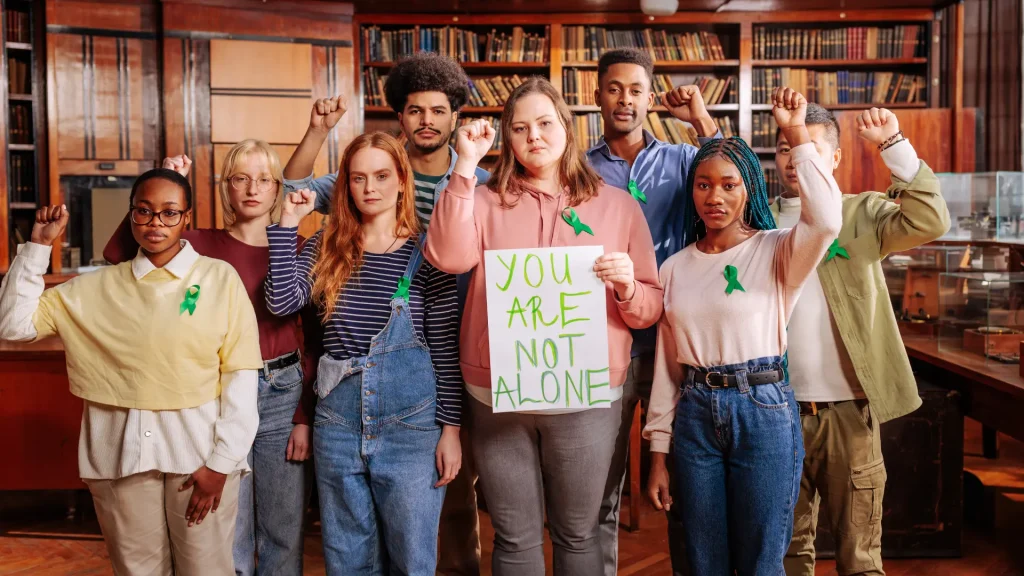 Knowledge is power. And in this case, it’s the power to crush mental health stigma in schools. Many students (and even adults!) hold misconceptions like “Only crazy people see a therapist” (admit it, you’ve heard it before!) or “Real men don’t get anxious or scared.” Our schools can counter these myths by weaving mental health education into the fabric of school life. And this isn’t limited to a one-off presentation, as many would think and hope.
It means continuous learning and dialogue, and things like:
 Curriculum that includes mental health literacy
 Curriculum that includes mental health literacy
Teach students about common conditions (anxiety, depression, ADHD, etc.), their prevalence, and that they can be managed. When students learn that mental health challenges are common and nothing to be ashamed of, it normalises help-seeking. They realise needing support is human, not a personal failing.
Teacher training and modelling
 Teacher training and modelling
Educate teachers and staff to recognise warning signs and respond with compassion. Teachers who understand mental health can better support a struggling student and gently dispel stigma in the moment (for instance, correcting a student who uses “psychotic” as a slur, or stepping in if someone is teased for visiting the counsellor). Importantly, staff should also model healthy behaviour like sharing, in age-appropriate ways, their own coping strategies or stories. When a teacher says, “I once felt so overwhelmed I talked to a counsellor, and it really helped,” it can profoundly validate a teen who’s been scared to do the same.
Highlighting success stories and resources
 Highlighting success stories and resources
Share age-appropriate stories of young people who faced mental health issues and got better with help. This could be through videos, books, or inviting guest speakers. The more students see that recovery is possible and that seeking help leads to improvement, the more “normal” and hopeful it becomes.
 Step 3: Fostering a Supportive School Culture
 Step 3: Fostering a Supportive School Culture
Culture is the invisible force that either nurtures a student’s confidence to speak up or snuffs it out. A supportive, inclusive school culture makes all the difference in reducing mental health stigma. What does that look like? In a stigma-free school, kindness and empathy are the norm, differences are respected, and nobody fears being ridiculed for struggling.
To build this culture, you should:
 Adopt a no-tolerance stance on bullying and mocking
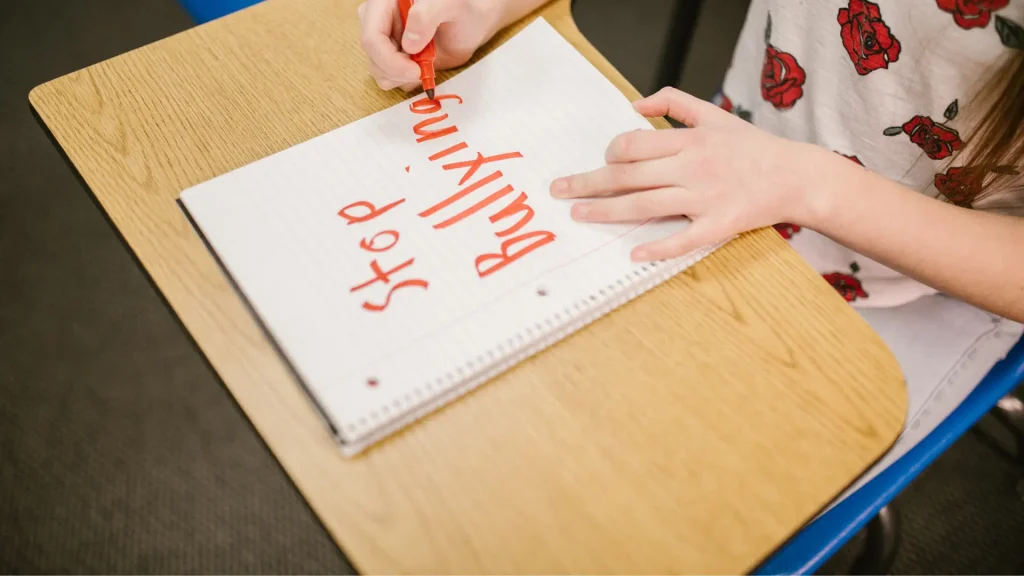 Adopt a no-tolerance stance on bullying and mocking
 Especially regarding mental health. If a student overhears “she is so crazy, she freaked out in class,” will she ever admit she has panic attacks? Probably not. But if the school consistently shuts down derogatory language and instead promotes empathy (“How can we support, Anna?”), our students learn that seeking help is safe. Creating a safe environment is fundamental for student mental health, and we cover this more in our post on bullying and student wellbeing.
 Celebrate diversity and inclusivity
 Celebrate diversity and inclusivity
Stigma often hits hardest those who feel “different.” Schools should work hard to cultivate an inclusive atmosphere where every student (whatever their background, identity, or ability) feels seen and supported. When students know their uniqueness is valued rather than judged, they’re more likely to voice personal struggles without fear of shame.
New Trend: Celebrities and Influencers Joining the Conversation
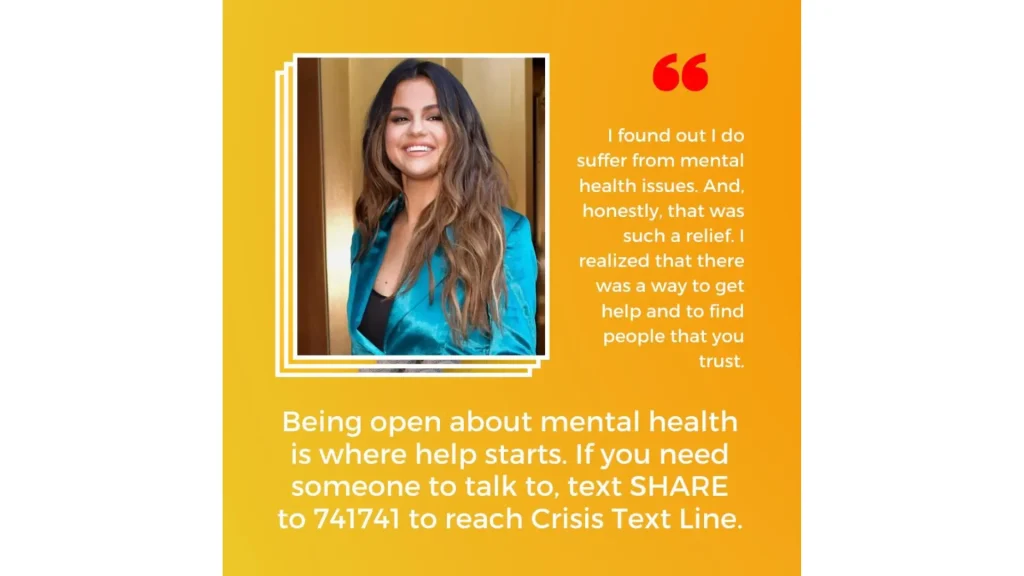
Selena Gomez featured in a Crisis Text Line campaign
Here’s an unexpected ally in our mission to break stigma: celebrities and influencers. Our teens live in a social media world, and when their idols speak up about mental health, it resonates with them – for real.
Think about celebrities like Selena Gomez speaking up about prioritising her mental wellbeing, or other pop icons and actors openly discussing therapy and depression (or see Lady Gaga, Billie Eilish, Shawn Mendes, and more). Such honesty from well-known figures has a huge effect: it shows students that mental health struggles can happen to anyone, and seeking help is not something to hide.
In fact, when public figures talk about their challenges, it helps reduce mental health stigma, raises awareness, and encourages others to seek help as well. Research backed by the NIH has found that celebrity disclosures can correct misconceptions, and normalise conditions like anxiety or bipolar disorder.
 Openly reducing mental health stigma
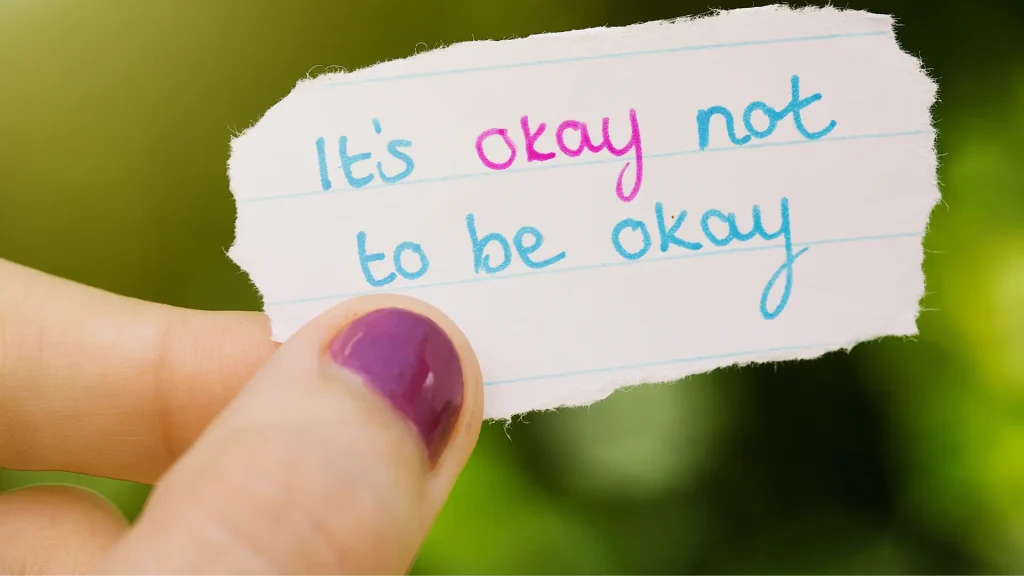 Openly reducing mental health stigma
For students, seeing a beloved influencer or star admit “I have panic attacks” or “I felt depressed and got help” can be eye-opening. It signals that talking about mental health doesn’t make you weak, it makes you real. And teachers and counsellors can leverage this in school, too.
Bring up positive examples in class discussions or school newsletters. e.g., “Even Captain America (actor Chris Evans) has spoken about his anxiety. If he can talk about it, we all can.” Or emphasise the takeaway: success and struggle are not mutually exclusive. As experts noted, when famous people share their mental health journey, it shows students you can be successful and still have mental health issues.
 Breaking the “Boys Don’t Cry” Mentality
 Breaking the “Boys Don’t Cry” Mentality
Stigma isn’t one-size-fits-all. In many cultures, there’s a gendered stigma that tells boys and young men to “man up,” hide feelings, and never admit vulnerability. This mentality can be deadly. Experts have pointed out that young men face intense social pressure to appear self-reliant and emotionally tough, leaving them few outlets to express pain or ask for help. In fact, suppressing emotions is one reason suicide rates among males are disproportionately high.

Owen Cooper as Jamie Miller in Adolescence. (CREDIT: Netflix)
Netflix’s 2025 series “Adolescence” dramatically illustrated this issue: portraying how a teenage boy’s bottled-up anguish and adherence to toxic masculine norms led to tragic outcomes. The show underscored how stereotypical masculinity can radicalise boys or drive them to harm, and it powerfully depicted the cost of silence. For schools, the lesson is clear: we must actively teach that emotions have no gender.
Some approaches you can try in your school include:
Classroom discussions and literature
Incorporate stories (in history, English, etc.) that showcase compassionate, emotionally open male figures. Discuss historical or contemporary male leaders who advocated for mental health (e.g., maybe a famous male athlete or actor who sought therapy). This provides counter-narratives to the “tough guy” trope.
 Male mentorship programs
 Male mentorship programs
Pair students with male mentors or tutors who model openness. Not every student is lucky enough to grow up with a model male-figure in the family, and that sometimes shows up later in life in ways we wouldn’t think of.
When a student has a trusted male figure (a coach, a counsellor, an older student) saying, “It’s okay, I’ve felt that way too,” it chips away at their fear of judgment.
Challenge language and jokes
Staff and educators should be vigilant about phrases like “man up,” “don’t be a girl,” or similar jokes mocking a boy for crying or ridiculing someone for being vulnerable. These incidents may seem minor, but they reinforce mental health stigma in students more than you would think.
Partnering with Parents and Communities
 Mental Health Stigma often has deep roots in family and culture. That’s why schools alone can’t do it all, and involving parents and the wider community is key to truly changing attitudes. Schools should actively engage parents through workshops, newsletters, or PTA meetings about student wellbeing and mental health. You should educate families that mental health struggles are common and nothing to be ashamed of, and share tips on supporting teens at home.
Similarly, partnering with community organisations or local mental health professionals can reinforce the message goes beyond the school walls. When our students and teenagers are met with consistent encouragement and understanding instead of judgment or being made fun of, the stigma has nowhere left to thrive.
Towards a Stigma-Free School Culture
 Towards a Stigma-Free School Culture
Changing a safe, stigma-free school culture doesn’t happen overnight. But every honest conversation, every supportive gesture, every myth busted is a step closer to a world where a student can say “I’m struggling” without fear. Reducing mental health stigma in schools is ultimately about trust and connection: students trusting that adults and peers will listen and help, not judge. As educators and allies, our role is to plant those seeds of trust daily.
 In a stigma-free school, seeking help is seen as responsible, not “weak.” Students realise that talking about mental health is as normal as talking about physical health. That’s the kind of environment where every young person can thrive.
By implementing these strategies: normalising conversations, educating everyone, nurturing a supportive culture, leveraging role models, tackling gender stereotypes, and uniting with parents and community, our schools can truly break the stigma around mental health in schools. And when we do, we empower our students with perhaps one of the most important lessons of all: it’s okay to not be okay, and help is always available.
FAQs: Reducing Mental Health Stigma in Schools
1. Why are students afraid to speak up about mental health?
Many students fear being judged or treated differently if they admit to feeling anxious, depressed, or stressed. Mental Health Stigma in schools creates a belief that having a mental health issue makes someone “weak” or “broken.” Teenagers, especially, worry about peers gossiping or parents and teachers overreacting. This fear of negative labels or social backlash keeps them silent.
2. How can teachers encourage students to ask for help with mental health?
Teachers can foster trust and openness in several ways. First, they should make it clear that they’re available to listen and help without judgment. For example, by saying things like, “If you ever feel overwhelmed, you can always talk to me or the school counsellor.” They can also share relatable stories or feelings (appropriately) to show students it’s normal to struggle sometimes. Importantly, teachers should maintain confidentiality and respond calmly when a student does open up, thanking them for sharing and connecting them to support.
3. What are some signs a student might be struggling with their mental health in silence?
Warning signs can vary, but some common red flags include sudden changes in behaviour or personality. For instance, a usually sociable student becomes withdrawn and isolated. Or a top performer starts to slip in grades and not participate in class. Other signs might be frequent absences or complaints of headaches and stomachaches (which can be stress-related), irritability or tearfulness, or even a change in appearance and self-care.
4. What if a student refuses help due to mental health stigma or fear?
It’s not uncommon for a young person to initially resist help, saying “I’m fine” when it’s clear they are not. In these cases, patience and persistence are key. Schools can try connecting the student with someone they trust. Perhaps a favourite teacher, coach, colleague, or school counsellor, to gently continue the conversation. Sometimes, sharing stories of peers (anonymously) or well-known figures who have benefited from counselling or support can help with their resistance, making them see that getting help is normal and positive.