

Bullying is a feeling, not just data & statistics
 Imagine you’re 13. Every day when the school bell rings for lunch break, your stomach starts turning as you anticipate what’s next. It’s been 3 weeks straight since you haven’t eaten your lunch at school (excluding that one occasion where you snuck into the bathroom to eat it there, in the middle of a class).
And…why haven’t you eaten your lunch? Because a schoolmate, who’s 3 years older than you, feels like he has a right to take your lunch. why? because he’s older, duhh… and because he will beat you up if you don’t comply.
Your mom already spoke with the principal, but he found out and got punished because of it, and you got another beating out of that… so this time around, you didn’t tell your mom anymore. Because you’re scared and you feel alone and helpless.
 This is what bullying feels like. And it can take up many forms
 This is what bullying feels like. And it can take up many forms
This was just one simple example. And the sad thing is that it doesn’t just carry physical bruises; it also bruises belonging. It messes with sleep, attention, and the will to show up.
That’s why we talk about bullying and student mental health together. Not as “kids being kids,” but as a school-wide wellbeing issue.
 Zooming out: in many systems, roughly 1 in 5 high-schoolers say they’ve been bullied at school, and more than 1 in 6 report cyberbullying.
Globally, estimates often land between 10% and 30% of adolescents affected.
And while numbers are helpful to try and understand the depth of the issue, they don’t tell the whole story. Because there’s no way to capture the whispered threats, the shrinking self-confidence, or the trauma that bullying leaves behind.
So today, we explore how bullying and mental health intersect, why safe school cultures matter, and what you can do to foster resilience, inclusion and wellbeing for your students.
Understanding the link between bullying, mental health and student wellbeing
 Bullying doesn’t wear just one outfit. Some days it’s loud and visible: violent shoves in the corridor, a threat whispered as the teacher turns to the board or straight-up conflicts in the lunch hall.
But other days it’s neat and quiet, passed via eye rolls, subtle gossip, or group chats that suddenly go silent when one name appears, or when “jokes” appear that only hurt one person.
And most of the time, bullying doesn’t stop at the school gates. As there’s the kind of bullying that also follows students home on their phones, social media channels or groups, long after school gates close.
Signs you might have noticed in school:
 Physical and verbal signs: the obvious stuff like shoving, tripping, name-calling, relentless teasing.
- Relational/social cues: freezing someone out of a group, rumour chains, subtle “you can’t sit here” moves that last for weeks.
- Cyber-bullying signs: screenshots, message/post edits, late-night group messages designed to humiliate; humiliating comments, and conflict that never sleeps.
- Targeted/retaliatory: coming after a student for their gender identity, or because they spoke up last time and “need to be taught a lesson.”
 Physical and verbal signs
Why does this belong in a wellbeing guide and not just a behaviour policy? Because bullying and student mental health are inseparable.
 The consequences of bullying in school
 The consequences of bullying in school
Living in a “fight or flight” state messes with the nervous system. Sleep gets choppy. Concentration shrinks. And just like that, the confident student goes quiet, their grades dip, and attendance wobbles.
But harm isn’t limited to the target. As a 2025 narrative review goes further to prove the fact that bystanders and even students who bully carry higher risks of mental-health difficulties, now and later on in life. And if the bullying goes on long term, the risks stack up: persistent low mood, panic, self-medication, and for a vulnerable few, even suicidal ideation.
When bullying becomes background noise in a school, belonging is the first casualty
 When bullying becomes background noise in a school,
 And without belonging, learning can’t and won’t happen. Because here’s the uncomfortable bit: bullying thrives in the gaps. Gaps between lessons, gaps in adult presence, gaps in clarity (“Is this reportable or just student drama?”), gaps in follow-through processes.
And it doesn’t take many gaps until students start feeling unsafe and alone in their own schools. The hopeful bit? When processes & action are consistent, reporting routes are safe, adults truly listen, and repair is a normal part of the journey, bullying loses its power.
Keep reading as we’ll map out what that looks like in practice: simple routines, quick responses, and the data that catches signs early so students don’t have to eat their lunch in hiding anymore.
But first, how do we define student wellbeing?
 It’s not “no problems detected.” It’s the presence of safety, belonging, and enough calm in the body to be able to learn and grow. Think emotional steadiness, healthy friendships, workable stress, and the energy to stay curious.
When wellbeing is present, students try, connect, and bounce back. When it’s missing, they shrink: growing more anxiety, more isolation, more “why bother” feelings rather than positive ones.
If you want the fuller picture, we unpack it here: Everything You Need to Know About Student Wellbeing. It also highlights how many teens report persistent low mood, proof that this isn’t just a side quest. It might be the storyline itself.
The impact of bullying on student mental health
 The body keeps the score: a nervous system stuck in high-alert mode, sleep that doesn’t actually feel like we rested, and a mind looping on “what if it happens again” thoughts. These are just some examples of the mental-health hit.
Not just hurt feelings, but a stress cycle that is hard to break and steals attention, motivation, and the will to show up.
And here’s the part we often miss: after an incident like this, the day doesn’t just “reset” for them.
Students carry the threat forward
 They start scanning rooms more attentively when they enter them. They sit where they can see near exits in case of anything. They pre-emptively laugh off small cruelties to avoid bigger ones.
Over time, this becomes a story that makes them believe: “Maybe I am the kind of person this happens to.” And that story is where anxiety, low mood, and avoidance take root in their lives.
Let’s rewrite the script. The next section maps out some of the reasons why the bullies become bullies, and why some students seem to attract bullies and negative interactions (without meaning to or deserving it, obviously).
Why bullying happens, and who it lands on
 Why bullying happens, and who it lands on
Bullying isn’t about “bad kids” and “good kids”. It’s about skills (or the lack of them), family and cultural backgrounds, values, identity, and more.
There isn’t a fixed formula for who is going to turn out a bully and who’s going to be a target for bullying, but some things can be observed.
Why some students bully
 Why some students bully
 Sometimes a student reaches for power because it works. Status in the group. A laugh from the crowd. No clear follow-through or consequences from adults. Add in shaky stress management, clumsy conflict skills, or learned behaviour at home, and “hurting others to cope” becomes a habit.
Online, it gets even easier. No eye contact, sometimes even no identity, instant audience and reactions, zero filters.
Why some students get targeted (it’s never their fault)
 Bullying tends to land where belonging is thin. Maybe a student who’s new to the class. Or a student who’s different in some visible way (clothes, accent, body size). Or maybe even a student who happens to be standing out, like top of the class or struggling at the bottom.
Minority groups or individuals who seem to “stick out” (newsflash: they actually don’t). And it’s never because of who they are. It’s because the climate allows their differences to be used against them.
What schools can change
- Make norms unmistakable: how we speak, how we repair, how we report.
- Respond fast and consistently; the crowd notices.
- Teach the missing skills: boundaries, “try that again” language, conflict repair.
- Close the gaps: adult presence in corridors, transitions, and online spaces your policy covers.
- Build belonging on purpose: mixed seating, buddy systems, quiet reporting routes.
 Make norms unmistakable: how we speak, how we repair, how we report.
When students have safe ways to feel heard and get support in the school, and adults follow through the same way every time, things start to change. That’s how bullying and student mental health start to move in the right direction.
 Why a safe school culture matters
 Why a safe school culture matters
A safe school culture isn’t just a zero-tolerance policy in a binder, or anti-bullying campaigns from time to time. It’s how the day feels at school.
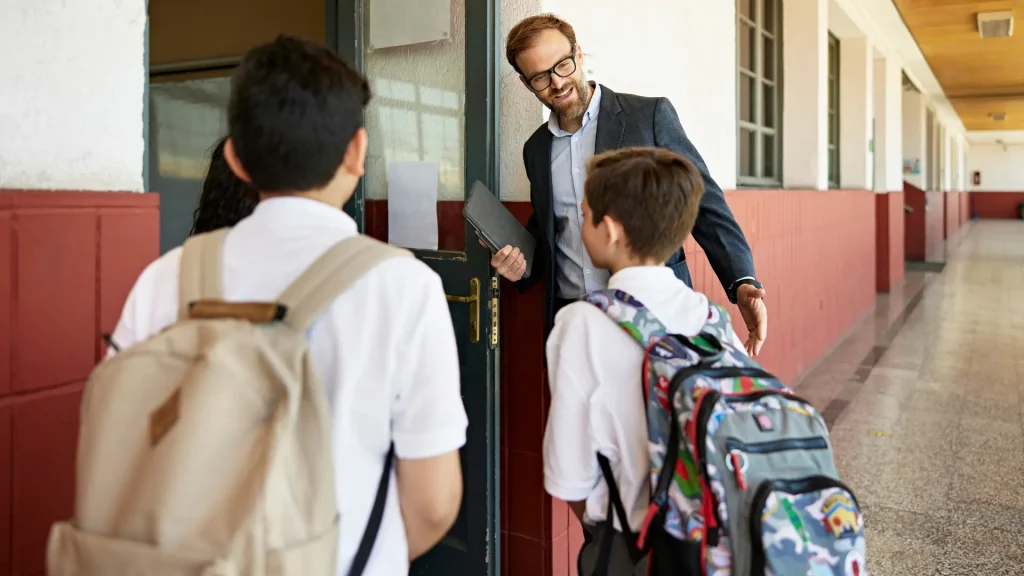
It’s the predictability of someone greeting you at the door, or the phrases that adults use when things get heated (“Pause. Repair. Reset.”), instead of reacting in the moment.
It affects student growth and development
When that safety is felt, not just stated in a wellbeing policy, students take more healthy risks: they are not afraid to raise a hand thinking they’ll stick out, or hesitate to try sitting with a new group at lunch. 
Teachers get their time back for actual teaching instead of behaviour correction, and parents can breathe easier knowing their kids are safe. Physically and emotionally.
The things we listed above are all small, repeatable moves that signal “you belong here” all day long. Make them visible, make them consistent, and you’ll see the changes following through.
Can a safe school culture affect bullying outside of school?
 Short answer: yes. If the norm at school is “we discourage bullying instead of encouraging it when we see it,” that tone follows students into group chats. If adults respond the same way every time a student crosses a line, they will learn that “crossing a line” online can have consequences, too. Also… Digital footprints are a thing.
But it’s true that phones & the internet now make bullying a 24/7 problem that goes beyond school. It can happen at midnight, on the bus, during homework hours or when out with the family.
What can and should schools do?
 Teach online habits like you teach lab safety
 Teach online habits like you teach lab safety
How to step out of a hostile chat, how to block/mute, how to save a screenshot, and how to report without making things worse. Simple, practised processes beat complicated workshops and lectures.
Work with families, not against them
 Work with families, not against them
Share a one-page guide: what to watch out for, how to respond in the moment, who to tell at school. Easy resources that shift the problem from yours to “ours” because they want their kids safe at school and outside of it, too. Keep it practical, and involve parents as much as possible.
 Look for early signs, not just big explosions
 Look for early signs, not just big explosions
If belonging, sleep, or mood suddenly seem to be worsening for a student, check in with them. There are tools that surface patterns, like the Spark 360 Student Assessment, that can help you spot drops in wellbeing levels or signs of distress before they become a crisis.
Next up: Anti-bullying strategies that help you build a safe school culture. Because it’s not enough to know the cause and effect of bullying, we also need to act on it, with urgency.
8 Steps towards an anti‑bullying focused, safe school culture
Building a culture that prevents bullying and promotes mental health requires coordinated, evidence‑based strategies. Here are some of the best practices grounded in research and current educational discourse. Short. Practical. Doable this term:
 1. One-page anti-bullying policy
 1. One-page anti-bullying policy
Make it clear and usable.
- Define bullying (in person + online) in plain language.
- Give two quiet reporting routes (eg, QR form + reaching out to a trusted adult).
- Promise a response timeline and a next step. Then keep the plan.
 2. Train adults and students
 2. Train adults and students
 No need for long lectures or complicated workshops with speakers. Quick practices, like:
- 15-minute refreshers each half-term on what to say in conflict situations or how to react.
- Boundary phrases that students can remember, like: “That’s not okay here,” “Come with me.”
- Classroom routines that lower the heat in the moment: greet, check-in, calm reset.
 3. Everyday inclusion, on purpose
 3. Everyday inclusion, on purpose
Belonging doesn’t happen by accident. It happens through hard work, and dedicated practices that can look like:
- Rotating seating and switching up groups. Don’t let cliques form and harden.
- Setting up student wellbeing ambassadors/buddies.
- Naming and noticing prosocial moves (“Thanks for bringing him in”).
4. Trauma-aware responses
 4. Trauma-aware responses
- Spot the cues: sudden withdrawal, jumpiness, quick anger.
- Use a calm reset space; then a short repair conversation.
- Clear hand-off to the counsellor and a dated follow-up.
5. Same rules apply online as offline
 Teach the behaviour and help them understand it, not just as a speech, but as a guide for their values and behaviours in and out of school. Things like:
- How to leave a hostile chat, block/mute, save evidence, and report.
- One page for families: settings, boundaries, night-off screens.
- Use repetitive phrases and/or boundaries
 6. Families and community as partners
 6. Families and community as partners
- They should know who to contact, what the school will do, and what they can try at home.
- Termly touch points (not only when something goes wrong).
- Bring in local services for workshops or drop-ins.
7. Use wellbeing assessments and data regularly

demo student 360 wellbeing report items
A quick pulse-check each term can surface dips in belonging, mood, or sleep before they explode into incidents. Tools like the Spark 360 Student Assessment give a 360° view (emotional wellbeing, stress regulation, self-confidence, resilience) and sort results into low/moderate/high, useful for knowing when to look closer or check in with a student. You can:
- Run a short check-in and review patterns first, and students second (urgencies excluded)
- Share two pattern takeaways with staff and agree on one small action per year group.
- Be clear with families and legal guardians about student privacy and the purpose of this shift. It’s supposed to be a conversation starter, not a diagnosis.
8. Catch struggles early, then offer targeted support
 Spot: quick mood/stress check-ins; watch for the classic flags like grade dips, avoidance, always tired, unexplained injuries, social withdrawal etc..
- Triage: teacher chat → tutor check-in → counsellor referral → safeguarding if needed. Make the ladder visible so no one has to guess who to turn to next.
- Support: small, targeted moves like a peer buddy for one class, a “safe pass” to step out for two minutes, a seat change, short skills sessions on boundaries and repair.
- Follow-up: check at one week and one month, and adjust. If a pattern returns, widen the circle (parent call, SEN/wellbeing lead).
 Spot:
Spot:Used together, steps 7 and 8 keep you out of constant firefighting: the right data shows you where to look, and the support plan tells you what to do next. Calmly, consistently, and with a clear focus.
Conclusion: Leading the way to safer schools
 Conclusion: Leading the way to safer schools
As we’ve seen, bullying and mental health are inseparable. When aggressive behaviours are tolerated, our students’ wellbeing crumbles. Yet, by understanding the multifaceted causes of bullying and implementing holistic, research‑informed strategies, we can prevent that from happening.
Creating a safe, inclusive culture is a journey, not a destination
 It requires commitment from teachers, leaders, students, parents and the wider community. It also demands empathy, consistency and creativity, qualities that are at the core of effective teaching. So we’re sure you’ll make it work!
By taking informed action and treating each student’s wellbeing as unique and vital, we can turn our schools into environments where bullying has no place and young people come to thrive, not get traumatised.
Agree?
P.S. We want your input and your ideas & experiences!
 P.S. We want your input and your ideas & experiences!
 Have you dealt with bullying in your school? Found any techniques that turned out to be successful? We want to learn from you and pass the knowledge forward to our community of teachers and school leaders.
Your tips and ideas might save a student from losing confidence, and you might contribute this time, but take some learning away next time, from another member of our community.
👉 Share your stories/ideas/experiences here.
FAQ: Bullying and Mental Health in Schools
1. Why should schools include bullying and student mental health in the same conversation?
Because bullying keeps students’ bodies on high alert until their sleep dips, focus shrinks, confidence erodes, and their overall learning stalls. Treating it as a wellbeing issue (not just “behaviour”) brings steadier routines, earlier support, and a culture where belonging can breathe.
2. What are the first 3 steps we can take to cut bullying and student mental health harms?
Start small and stay consistent:
- Publish a one-page anti-bullying policy (plain language, two quiet reporting routes, clear response timeline).
- Train adults and students on how to set boundaries, how to defend themselves or their opinions and how to develop healthy coping mechanisms
- Embed low-lift routines (greet, brief check-in, calm reset) so every class starts safer.
3. Can a safe school culture reduce cyberbullying outside school hours? And if so, how?
Yes, as culture travels. When values and rules are clear and understood, students often carry them into their personal lives, DMs and group chats. Teach them simple online moves like leave hostile chats, block/mute, screenshot and report, and share a one-page guide with families so home and school can respond the same way or in similar ways.
4. How can we spot bullying early? Is it possible?
Yes, if you use light, regular wellbeing pulses to flag dips in belonging, mood, or sleep, then act on patterns (not just individual blips). Tools like the Spark 360 Student Assessment can help surface where support is needed. Then you can follow that with a clear triage ladder (teacher → tutor → counsellor → safeguarding if needed) and short, targeted support interventions, with check-ins at one week and one month.