

Why Talk About Wellbeing at School?
 Being a school leader means juggling a lot. From student achievement, to teacher morale, budgets, policies and the ongoing wellbeing of everyone in the building. You want students and staff to thrive, yet the data often stops at test scores. And that’s a problem. As recent data shows that nearly 55 % of female teachers and 44 % of male teachers feel burned out at work. Pressure from parents and students, especially since the shift to hybrid teaching during the pandemic, made stress levels rocket. And when teachers feel overwhelmed, their ability to support students fades away with each passing day.
Student Wellbeing AND Teacher Wellbeing
 But that’s not all. Students are dealing with their own challenges, too. Some even find themselves turning to AI chatbots as a substitute for human connection. A tragic example shared in the press describes a teen who turned to a chatbot for support, ending tragically. Over time, the bot became a confidant and even encouraged suicide. This is why true, real support matters. Because technology can play a role in our students’ wellbeing, but it can never replace human care. Our schools need tools that surface problems early, encourage healthy coping strategies and empower teachers without adding to their workload.

Arcadius Muntean, member of the Spark Generation team
Enter the Spark Wellbeing Assessment for Students and Teachers. Two separate but connected tools for teachers and students, developed by Spark Generation with research led by organisational psychologist Arcadius Muntean. And before you think “great, 2 more personality tests!”, these 2 assessments do more than simply collect scores. They open a conversation about what’s happening below the surface in your school, and what you can do about it.
So, What is the Spark Wellbeing Assessment?
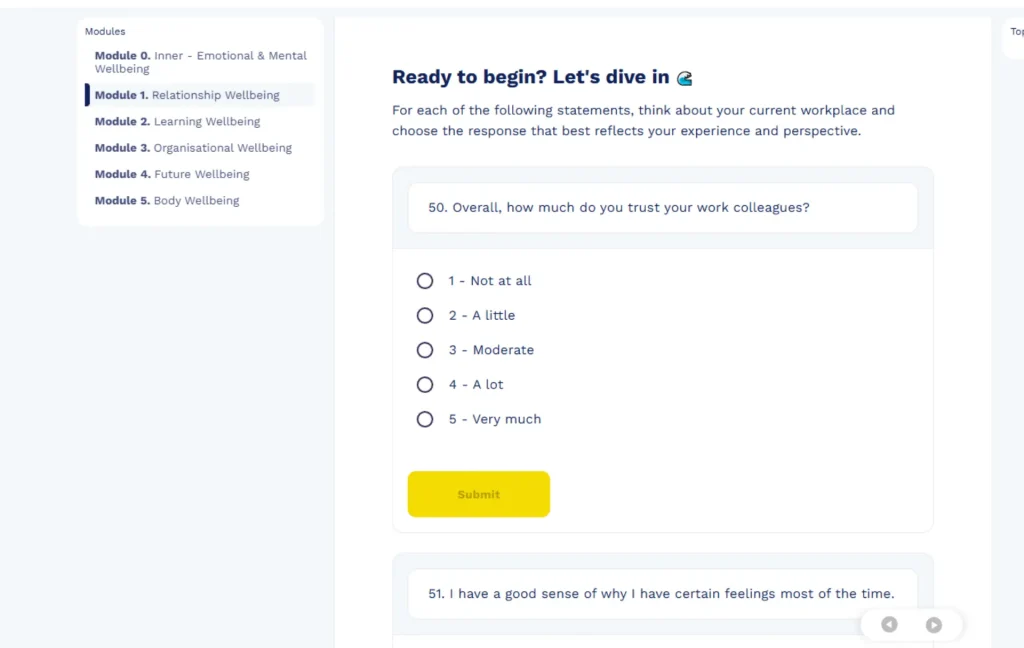
example question from the Spark Teacher Wellbeing Assessment
Designed by practitioners, not just programmers
Spark Generation’s team built these assessments because grades alone don’t tell the full story. For teachers, the Inner Wellbeing assessment looks at emotional health, stress regulation, self‑confidence and resilience. It frames your experience gently: the report reminds you that it’s “a mirror, not a verdict”. You’ll also find five daily practices such as mindful micro‑breaks, self‑compassion talk and post‑work recovery rituals. Each recommendation is grounded in research (e.g., mindful breathing calms your nervous system) and designed to fit into a busy school day.
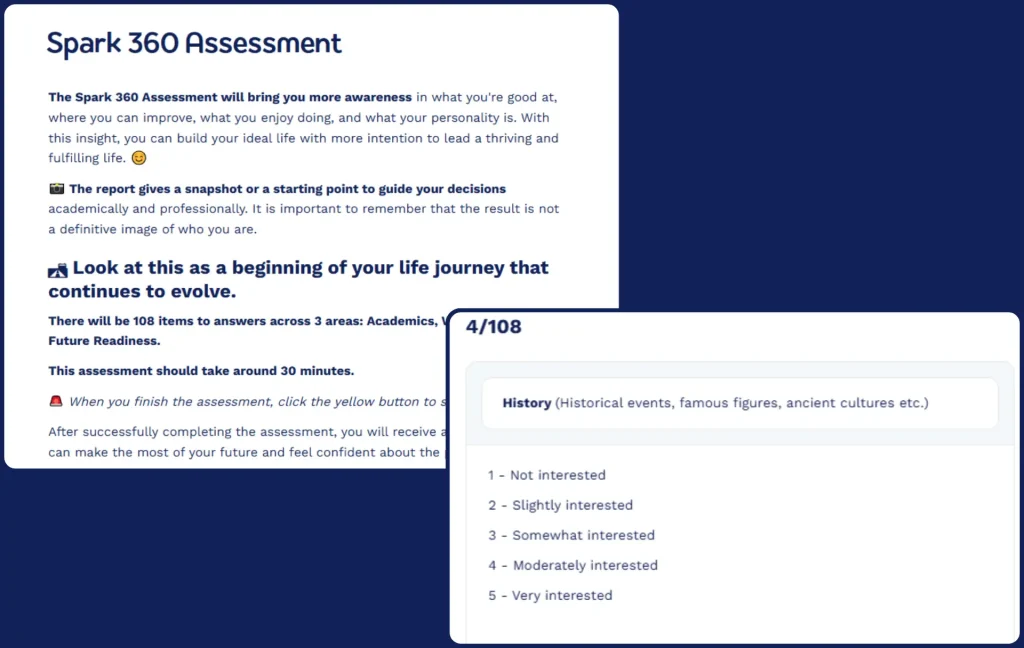
example question from the Spark Student Wellbeing Assessment
For students, the Spark Wellbeing Assessment offers a 360‑degree view of academic interests, emotional wellbeing and future readiness. The report explains that it’s not a clinical diagnosis, but a tool to understand how you’re feeling and where you might need extra support. It explores levels of feeling down, nervousness and stress and distinguishes between low, moderate and high wellbeing. Beyond emotions, the Student Assessment also evaluates 21st‑century skills like adaptability, communication, time management and critical thinking in students. After that, it maps career interests using the Holland Codes and suggests suitable industries or academic courses for your students.
 Why two assessments?
 Why two assessments?
Teachers and students experience school differently. Teachers need tools to prevent burnout and keep them grounded in their purpose. While students need guidance on who they are and where they’re heading. Using both assessments together offers a holistic snapshot of your school community, one that goes far beyond test scores. One that gives you real data and class or school-wide views over what needs to be improved, and where you should focus your efforts.
Why Schools Need This Tool
 Why Schools Need This Tool
Schools are people‑powered organisations. When the people are struggling, so does everything else. Teachers usually struggle with heavy workload, lack of resources and unclear expectations as sources of stress, and their emotional exhaustion is linked to lower job satisfaction and poorer student outcomes. Students, meanwhile, face heightened anxiety and confusion about their future. Not all of them get that type of guidance at home. And not every school has teams or teachers prepared to assist with career guidance. The Spark Wellbeing Assessments address both sides of this equation:
Identifies hidden challenges
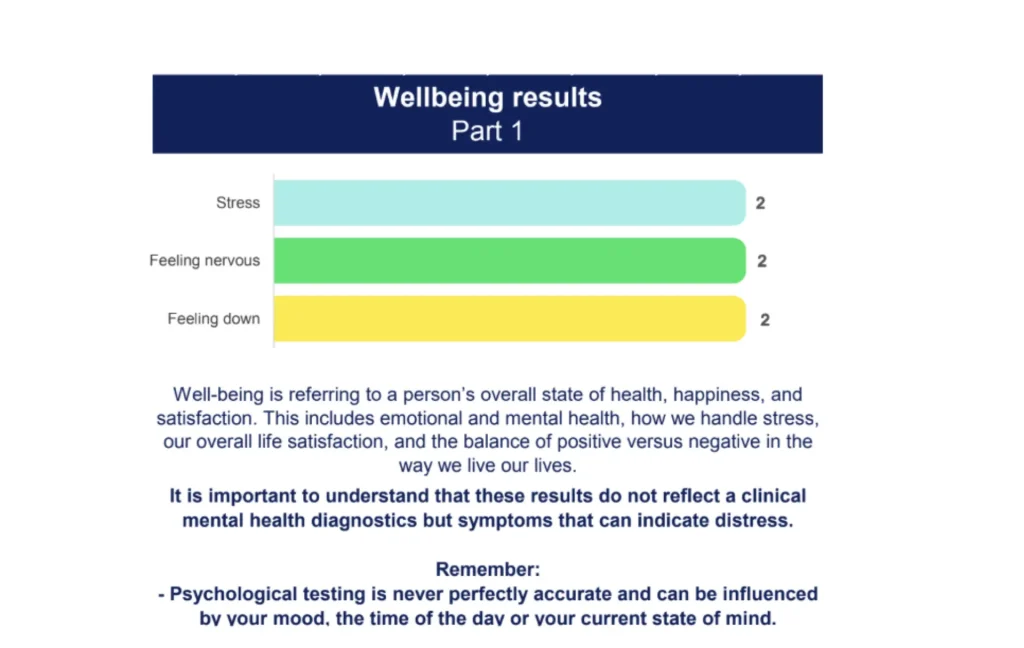
example screenshot from the Spark Student Wellbeing Report
Teachers gain insight into stress levels, self‑esteem and coping strategies. Students learn about their own wellbeing, as well as what areas interest them more, and what skills they might be missing for their desired career paths.
Creates a common language
When you know what “moderate” vs. “high” stress looks like, conversations about support become easier.
Prioritises wellbeing without adding to the workload
The assessments are self‑guided, take around 20-30 minutes and generate reports automatically. Teachers aren’t expected to become therapists. The tool simply highlights where help is needed and how the school could implement that type of support. We provide the resources.
How the Spark Wellbeing Assessment Helps
1. Benefits for Teachers
 Self‑awareness and stress management. The Inner Well‑Being report invites teachers to pause and check in with themselves. It asks you to rate your mood, stress and nervousness on a simple scale, then offers concrete suggestions. For instance, taking “60‑second breathing breaks” between lessons or practising self‑compassion talk when overwhelmed. It even encourages building recovery rituals like a short walk or journaling after work. Boosting self‑confidence. The report categorises self‑confidence as strong, stable or vulnerable. If you fall into the vulnerable range, you’ll receive tips like celebrating small wins, reframing negative self‑talk and seeking feedback from trusted colleagues. There’s a section on mental reframing that teaches you to view challenges as opportunities and practice constructive self‑talk. Reducing burnout. By encouraging teachers to express emotions rather than suppress them, the assessment addresses emotional exhaustion, which is a core dimension of burnout. Support in prevention means beating burnout to the finish line and preventing it from ever happening.
2. Benefits for Students
 Holistic self‑understanding. The Student Assessment shows students how often they feel down, nervous or stressed and explains what low, moderate and high levels mean. It stresses that wellbeing includes positive emotions, not just the absence of anxiety or depression. 21st‑century skill development. The assessment evaluates self‑leadership (ownership, adaptability, purpose), healthy relationship skills (communication, collaboration, conflict management) and mastery tools (time management, planning, digital skills). It also measures future‑ready thinking, in terms like critical thinking, problem‑solving and creativity. Career exploration. Using the Holland Career Codes, the report identifies career domains such as realistic, social or enterprising. Students see examples of jobs aligned to their interests and receive suggestions for courses and industries. They’re reminded that careers evolve and multiple profiles can coexist, so the recommendations are a starting point, not a prescription.
3. Benefits for Schools
 3. Benefits for Schools
Data‑driven decision‑making. Aggregated class and school reports help leaders see patterns in wellbeing and engagement. The Spark assessments deliver student 360° data, whole‑school insights and targeted interventions. And when at least 70 % of students complete the assessment, you receive a school‑wide report highlighting strengths and gaps.
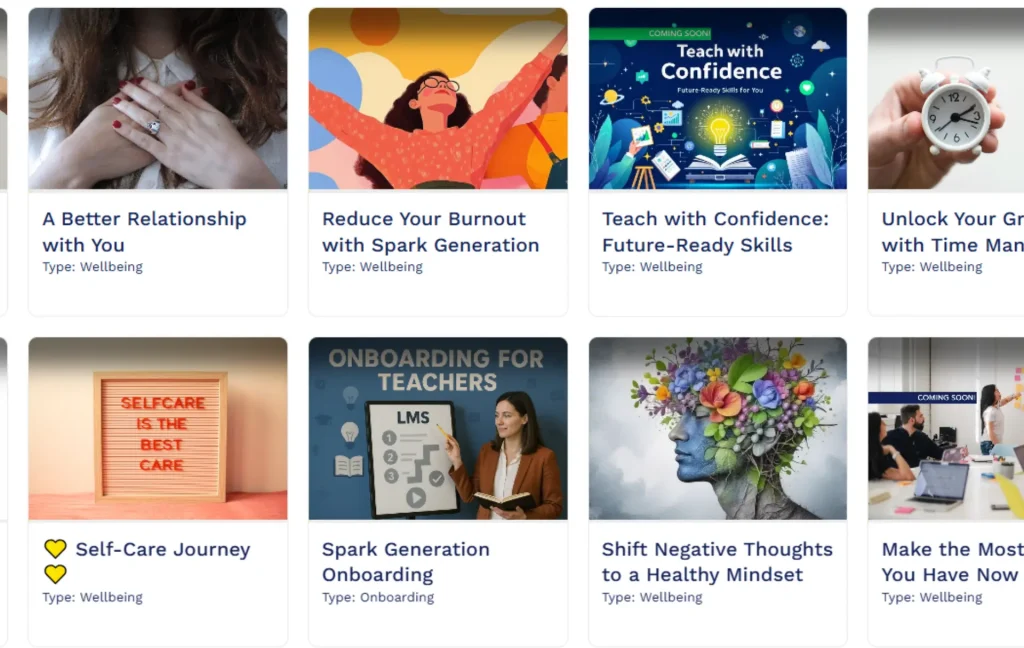
Wellbeing courses from the Spark Generation platform
Reduced blind spots. Knowing which classes experience high stress or where teachers feel disengaged allows you to allocate resources effectively. This beats guessing, and you’ll know whether to implement mindfulness workshops, adjust timetables or invest in professional development. Support without extra work. The assessments are built into the Spark platform, so teachers aren’t drowning in paperwork. They also get access to resources such as group coaching sessions for students and teachers, and an AI‑powered learning platform to reduce administrative tasks.
I’ve Signed My School Up. What Happens Next?
- Register. Chat with a member of our team and let us understand how we can support you best! If you’ve already registered to get our Spark Wellbeing Assessment for free, a member of our team will contact you to finalise the partnership agreement.
- Send your lists. Share your list of teachers and/or students. Spark enrols them for you.
- Activate accounts. Participants receive invitation emails within 48 hours..
- Take the assessments. Each participant completes the assessment online at their own pace; it takes about 20-30 minutes.
- Receive reports. Within 24-48 hours, individual reports are generated. Class and school reports are generated once a majority of teachers and/or students have taken the assessment. That’s when the real work: reflection and action, begins.
Making the Most of Your Reports
 The Spark reports are only the starting point. To turn insights into impact: For teachers: Carve out time for self‑care routines suggested in your report. One teacher told us, “I started taking two‑minute breathing breaks between classes and felt my energy return by lunchtime.” Discuss your findings in staff meetings; colleagues often face similar struggles. Leaders can use aggregated data to adjust workloads or provide professional development. Revisit the assessment mid‑year to monitor progress.
 For students: Encourage students to review their reports with a trusted adult. A Year 10 student shared, “Seeing my stress score made me realise I needed to ask for help before exams. The report’s tip about time management has already improved my study habits.” Use the career suggestions as a springboard for guidance counselling sessions. For schools: Integrate findings into your strategic planning. If many students show low adaptability, consider workshops on resilience. If teachers report emotional suppression, invest in wellbeing programs. Schedule follow‑up assessments to track whether interventions are working.
A Future Where Wellbeing Is Central
 The Spark Wellbeing Assessments aren’t magic wands. They’re mirrors that reflect where your community stands and what it needs. In an era where students can mistakenly trust an AI chatbot to meet their emotional needs and teachers face record‑high burnout rates, proactive wellbeing measures are no longer optional. As a school leader, you have the chance to create a culture where data informs compassion, where teachers feel supported and where students develop the resilience and skills they need to thrive. Spark’s assessments provide the roadmap. You and your staff take the journey.
Access our Teacher & Student Assessments here for free until October. Let’s have a short chat so we can understand how to support you best!
Empowering Teachers & Students Through the Spark Wellbeing Assessment FAQs
1. What is the Spark Wellbeing Assessment for teachers and students?
It’s a pair of complementary assessments developed by Spark Generation (with input from psychologist Arcadius Muntean) that go beyond grades. The teacher version focuses on inner emotional and mental wellbeing, offering a gentle mirror rather than a verdict and providing practices like mindful micro‑breaks and self‑compassion to help manage stress. The student version evaluates academic interests, emotional state and readiness for the future; it stresses that results aren’t clinical diagnoses but snapshots of wellbeing, and it maps 21st‑century skills and career interests via Holland Codes.
2. Why do schools need a tool like this?
Teacher burnout is alarmingly high, while students need support, not just teaching in school. Spark’s assessments help schools spot hidden challenges early, provide actionable wellbeing data and foster healthier, more supportive environments.
3. How do these assessments benefit teachers, students and schools?
Teachers receive personalised insights into stress, self‑confidence and emotional regulation and learn practical strategies for prevention. Students gain a holistic view of their mental health, learn about their strengths and gaps in 21st‑century skills and explore career pathways. Schools benefit from aggregated data to guide policies and interventions, reducing blind spots and supporting both teachers and learners.
4. What happens after my school signs up?
The process is straightforward: register on the Spark Generation website, sign the partnership agreement, send your teacher and student lists, and Spark handles enrolment. Participants receive activation emails, take the 20‑30‑minute assessment and, within 24 hours, individual reports are generated. Class and school reports are generated once the majority of teachers and/or students from a school take the assessment. Schools can then act on these insights and schedule follow‑ups to monitor progress.