
 Teachers are often described as superheroes, but even superheroes need time to breathe.
Recent UK data shows us how urgently we need to look after our staff: 78% of education staff are stressed, and the figure climbs to 84% for senior leaders, while over three‑quarters feel their organisation’s culture harms their mental health.
Nearly four in five teachers experienced physical, psychological or behavioural symptoms due to work in the past year.
So it’s no wonder we sometimes feel like we’re trying to pour from an empty cup.
Mindfulness and Social Emotional Learning (SEL) offer a way out from this, though. Let’s find out more about these evidence‑based approaches that help us and our students navigate stress, build resilience and create more compassionate schools.
In this guide we’ll explore what mindfulness and SEL are, why they matter and how you can weave them into daily classroom life without adding another hour to an already crammed timetable.
Mindfulness and SEL: What are they?
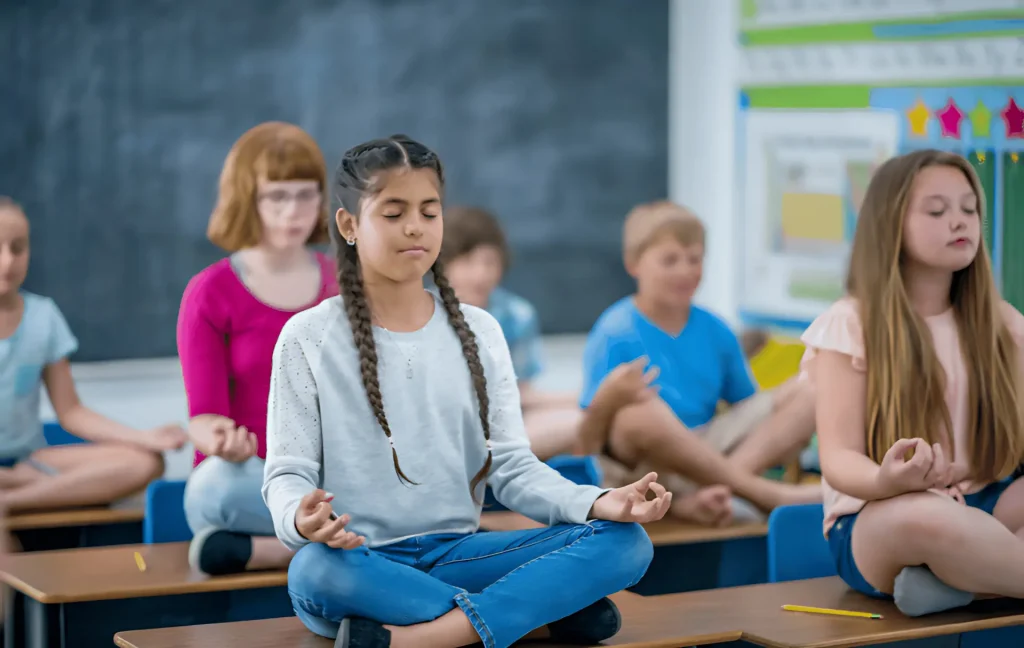 Mindfulness is simply “paying attention in a particular way: on purpose, in the present moment and non‑judgmentally”. It starts with noticing your breath, then expands to observing thoughts and emotions without immediately reacting.
Research shows that even short, daily practices can make a difference. A 2024 study from the University of Southampton asked 1,247 adults to use a free meditation app for ten minutes a day.
After a month, participants reported reduced depression by 19 % and reduced anxiety by 12.6 % compared with a control group, alongside improvements in wellbeing and motivation to adopt healthier habits. The improvements were still maintained a month later.
 But apart from adults, mindfulness benefits young people too. MIT researchers found that sixth‑graders who received eight weeks of mindfulness training reported lower stress and negative feelings compared with classmates who took a coding class.
Brain scans showed reduced activation of the amygdala (the brain’s “alarm centre”), suggesting mindfulness may help students respond rather than react to stressful events.
Social Emotional Learning (SEL) refers to programmes that teach pupils to recognise and manage emotions, set and achieve goals, show empathy, build positive relationships and make responsible decisions.
The Education Endowment Foundation notes that SEL interventions typically add three months’ additional academic progress over a year. They work best when embedded into daily routines and supported by professional development. A 2023 review of 12 meta‑analyses concluded that high‑quality SEL programmes consistently improve pupils’ social, emotional, behavioural and academic outcomes.
In other words, investing in wellbeing isn’t a distraction from academics, but more like a pathway to it.
Why wellbeing matters for teachers and pupils
 The Teacher Wellbeing Index we mentioned earlier reports that 78 % of staff feel stressed and say their organisation’s culture negatively affects their mental health. In addition, roughly a third experienced symptoms they believed might indicate depression or burnout.
And it’s no surprise that when we’re operating in survival mode, it’s harder to stay patient with disruptive behaviour or to offer pupils the emotional support they need.
Because our stress is visible and it also affects our students whether we like to admit it or not.
 Mindfulness and SEL provide tools to counteract this cycle. By practising mindfulness, we can learn to pause before reacting, creating space to respond thoughtfully to challenges.
In the meantime, SEL gives our students language for their feelings and strategies to manage them.
When our pupils feel heard and understood, misbehaviour decreases and engagement rises. SEL has been shown to improve pupils’ social interactions and self‑management and has particular benefits for disadvantaged students, making it a powerful equity tool.
In short, these practices help us move from firefighting to cultivating a thriving community.
Mindfulness Techniques You can Try with Your Class
The following mindfulness exercises require little preparation and can be woven into your existing routines. Pick one or two that resonate with you and test them with your tutor group, form time or subject class.
 Box breathing (2 minutes)
 Box breathing
Invite pupils to sit comfortably, feet on the floor. Explain that we’ll breathe in for a count of four, hold for four, exhale for four and hold again for four. Just like drawing a square with your breath.
You can guide them through several cycles. This technique calms the nervous system and can be used before exams or difficult discussions.
Spidey‑senses (2–3 minutes)
Encourage students to pretend they’re superheroes who need to notice everything. Ask them to silently identify five things they can see, four they can hear, three they can feel, two they can smell and one they can taste. This grounding exercise brings attention to the present moment.
 Mindful jar (5 minutes)
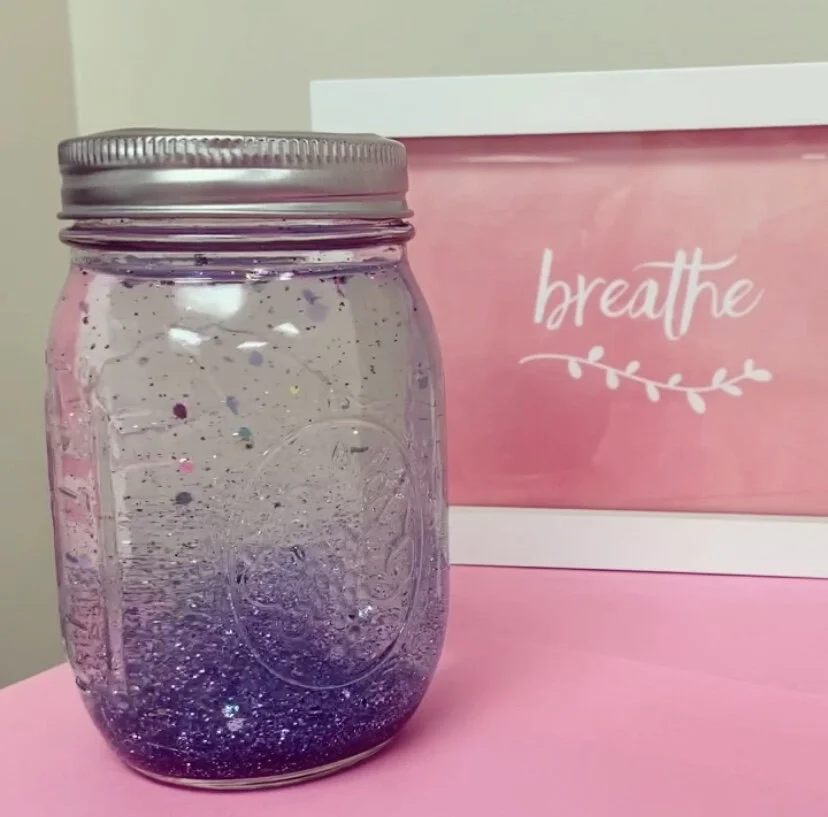
Fill a clear jar with water and add glitter (or use a snow‑globe if glitter isn’t practical). Shake the jar and explain that the swirling glitter represents our thoughts when we’re upset or excited.
Watching the glitter settle teaches patience and shows that thoughts and feelings eventually calm down. This visual metaphor works well with younger pupils but can also be a tongue‑in‑cheek reminder for teens.
Body scan (5 minutes)
Guide pupils to close their eyes (if comfortable) and move their attention slowly from their toes to their head, noticing sensations without judgement. This builds awareness of tension and helps students identify stress signs early. Consider using this after PE or at the end of the day.
 Mindful transitions
 Mindful transitions
Incorporate micro‑pauses between lessons. Before starting a new subject, invite students to take a single deep breath together and let go of the previous activity. Over time, these seconds add up to a calmer classroom climate.
We’ve found this exciting and resourceful list of mindfulness exercises, that lists 51 types of mindfulness exercises that you can try out.
Obviously, you can put your creator teacher hat on and come up with your own interpretation of these, or even create new mindfulness techniques that you can use with your students. The limit is the sky.
SEL Activities to nurture emotional intelligence
SEL doesn’t need to be a stand‑alone programme. It actually thrives better when integrated into ordinary lessons. Here are some ideas of how you can incorporate SEL in your classes, naturally and without needing to allocate extra space and time for it:
 1. Feelings check‑in – At registration or during morning meetings or even the start of the class, ask pupils to rate their mood using coloured cards or emojis (red for low, yellow for neutral, green for high). This normalises emotion talk and helps you spot who might need extra support.
2. Circle discussions – Once a week, hold a “circle time” where your students can share wins, challenges and goals. Set ground rules around listening and confidentiality.
As facilitator, model vulnerability. For example, you can start by saying something genuine, like “I felt overwhelmed yesterday when marking essays. Taking three deep breaths helped me re‑focus.” This fosters trust, courage and empathy and helps builds a supportive community.
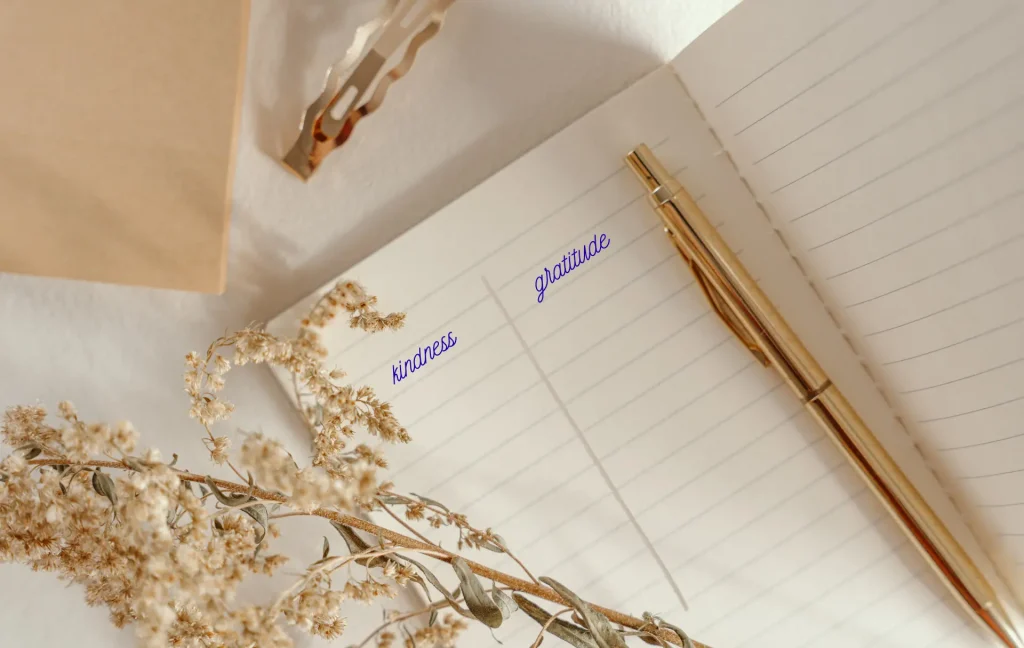 3. Gratitude or kindness journals – Provide each pupil with a notebook to jot down three things they’re grateful for or acts of kindness they noticed. Encourage students to share entries voluntarily. Hearing about their peers’ success and good news in general can lighten the mood.
4. Group problem‑solving – Incorporate cooperative learning tasks that require negotiation and perspective‑taking.
For instance, in history class you can ask groups to analyse an event from multiple viewpoints. In science class, you can assign roles for a lab and encourage students to discuss how they’ll handle disagreements.
 5. Class agreements – Co‑create a set of class norms around respect, effort and support, together with your students. Because when your students help you write the rules, they’re more likely to internalise them.
Revisit the agreements after incidents and ask students to reflect on how they lived up to them. This emphasises responsibility rather than punishment.
Integrating wellbeing into your school and classroom
 You don’t need to add a new lesson block to make wellbeing a priority. Instead:
Start small – Begin with one mindfulness exercise per day and/or one SEL strategy per week. In processes like this, consistency matters more than duration.
Lead by example – Share your own experiences with mindfulness and emotion management. When pupils see you take a deep breath before answering a tricky question, they learn that self‑regulation is a skill, not a sign of weakness.
 Embed across subjects – In English, analyse characters’ emotions and coping strategies. In maths, discuss perseverance when facing challenging problems. In PE, incorporate mindful stretching.
Partner with parents and carers – Share what you’re doing and suggest simple activities families can try at home, such as gratitude conversations at dinner.
This reinforces the message that wellbeing isn’t confined to the classroom.
Addressing misconceptions and challenges
 A common misconception is that mindfulness is religious or requires emptying the mind. In fact, mindfulness as practised in schools is secular and evidence‑based. It doesn’t ask students to adopt any spiritual beliefs; it simply trains attention.
Another concern is time: with exam pressures, can we afford to take minutes away from content? The evidence suggests we can’t afford not to.
We saw that mindfulness improves focus and reduces anxiety, while SEL interventions yield academic gains, so it’s basically to our students’ advantage to have SEL incorporated in their daily practices. Many techniques fit into existing routines and actually save time by reducing disruption.
 But it’s also important to recognise that mindfulness isn’t a cure‑all.
Students with acute trauma or mental health conditions may need additional support or counselling. SEL should complement, not replace, safeguarding and counselling services.
And last but not least, remember that school culture matters. At first, some pupils may be sceptical or embarrassed. Invite feedback, be flexible and respect different comfort levels. Over time, the benefits usually speak for themselves and you won’t need to do too much convincing.
Conclusion: Cultivating a culture of care is easier than you think
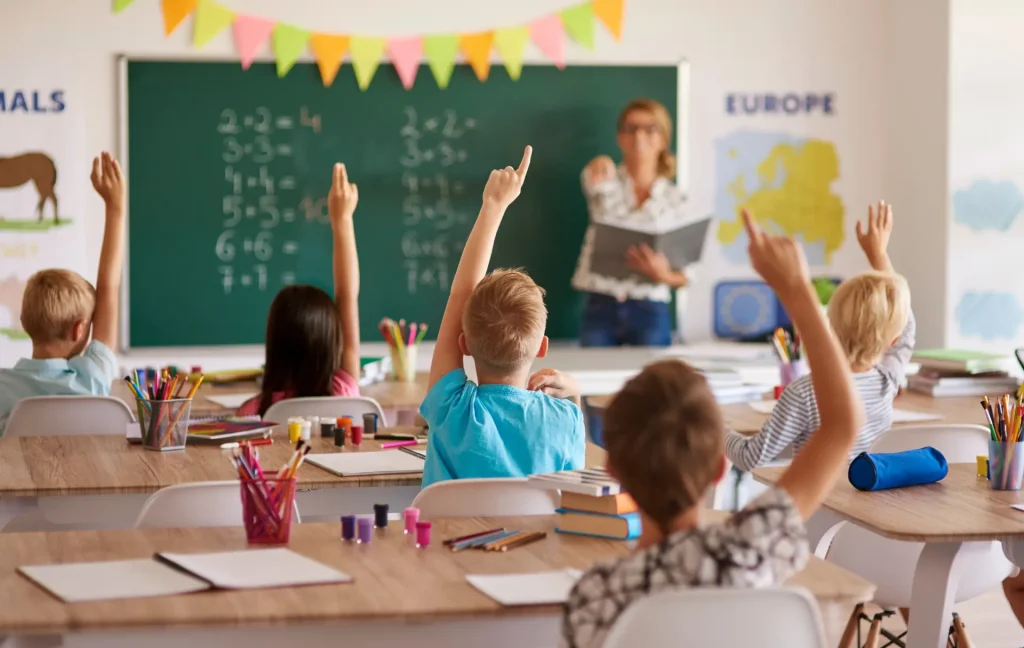 Once again: improving wellbeing in your school isn’t about adding more to your or your staff’s workload. It’s about changing how we work.
If we model self‑care and prioritise emotional literacy, pupils will follow. And when 78 % of us teachers report stress and many feel unsupported, taking small, consistent steps towards mindfulness and SEL is an act of professional responsibility. For all of us, and our students.
These practices help us create classrooms where everyone, staff and students alike, can breathe more easily, think more clearly and flourish.
What SEL and mindfulness activities do you currently practice in your classroom?
Frequently Asked Questions (FAQs)
1. What is mindfulness and why is it important in schools?
Mindfulness is the practice of paying attention to present‑moment experiences without judgment. In schools, it helps students calm their minds, manage stress and focus on learning. Research shows that mindfulness training enhances academic performance and mental health in middle schoolers and improves self‑regulation in students with anxiety or ADHD. Even brief practices like mindful breathing can help create a calmer classroom climate and set the stage for learning.
2. How do social‑emotional learning (SEL) and mindfulness work together?
SEL programmes build skills such as self‑awareness, self‑management and social awareness while mindfulness develops the attention and emotional regulation needed to practise those skills. Combined, they foster a classroom environment where students can notice their feelings, pause and choose responses that support healthy relationships.
3. Which mindfulness techniques can teachers start with?
Begin with short, secular practices that fit easily into the school day:
- Invite students to sit quietly for a minute;
- Practice breathing to offers a quick reset during transitions or before assessments;
- Practice Mindful Posing using superhero‑style poses to boost confidence and present‑moment awareness;
- Body Scan to help students tune into bodily sensations and relax.
These practices require little time or equipment and can be adapted to different age groups.