

 As educators, counsellors, and school leaders, we dedicate our careers to creating safe, supportive learning environments for our students. So I think it’s safe to assume that we’ve all felt that pit in our stomachs when we hear about a bullying incident.
Despite the fact that we write policies, we hold assemblies, and we intervene when we see it, the challenge often feels overwhelming, like a fire we’re constantly trying to put out. (Or, is it just me?)
So, how can we actually turn things around and prevent bullying from happening instead of fixing and repairing after it has already happened? You might not believe it, but one of the most effective, sustainable anti-bullying strategies doesn’t come from the top down. It actually comes from the students themselves.
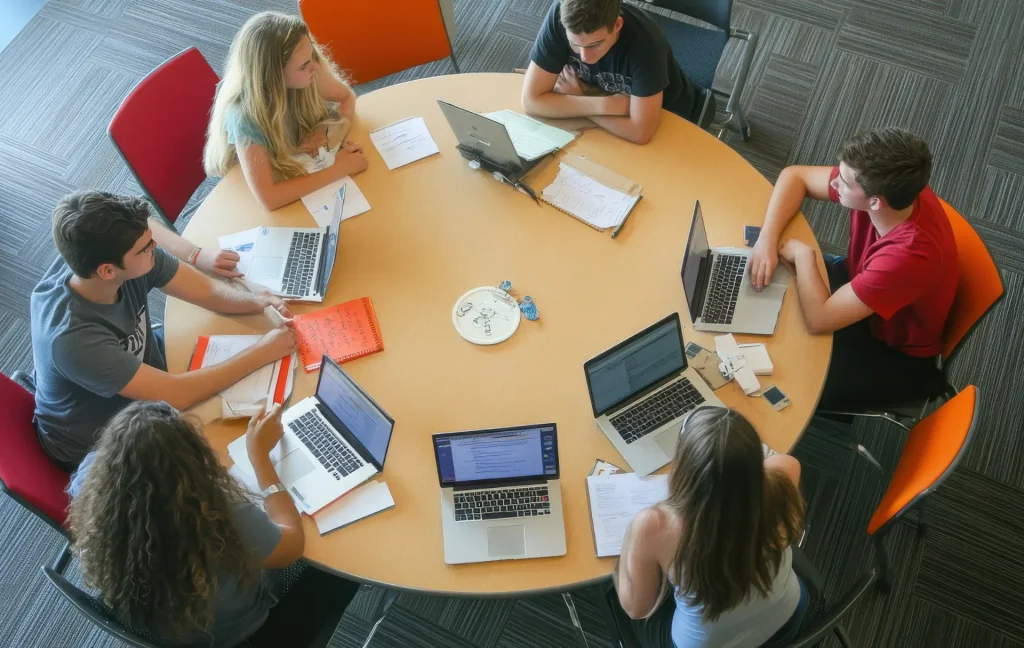 By following five simple, non-confrontational steps, your students can become the most powerful anti-bullying force in school.
And before you think “whaaat?”, this isn’t about asking students to be superheroes or to put themselves in harm’s way. It’s solely about teaching them to react and giving them a new script. It’s more about a strategic shift, empowering them to move from the role of passive bystander to that of an active, effective ally.
Because in this strategy, our goal isn’t just to punish negative behaviour but to actively build a positive school culture where intervention is the norm, not the exception.
But first, why are we talking about this today?
International Day Against Violence & Bullying in Schools
 November 6th, the International Day Against Violence and Bullying at School, is the perfect time to re-evaluate and rethink our approach. Because for too long, we’ve viewed bullying as a two-person conflict: the bully and the victim.
But this framework is dangerously incomplete. The truth is that bullying is almost always a group dynamic. The person engaging in the bullying is often performing for an audience.
That audience, we can also call them the silent majority, or the bystanders, is the crucial third piece to the puzzle. Their silence is often misinterpreted as approval, which pours fuel on the fire and gives the person bullying the social validation they crave.
 This is where we, as educators, have our greatest opportunity to change things around. We can’t be in every hallway, on every bus, or in every group chat our students have.
But our students can, one by one. So by focusing our efforts on transforming them, the bystanders, we take a step back from fixing and punishing, to preventing the behaviour from ever happening. How do we do that? By turning silent bystanders into active allies.
What is a Silent Bystander vs. an Active Ally?
 We’ve all seen it: an incident occurs, and a crowd of students just watches, phones out, recording to send around to their friends and group chats, or simply choosing to turn away like nothing happened. Our first instinct might be frustration. “Why didn’t anyone do something?“
But then, let’s ask ourselves: “Have I ever been a silent bystander?”.
A recent case took over the international and global media, (almost?) turning into a social movement, when Ukrainian Iryna Zarutska lost her life in a metro stabbing, with multiple bystanders around. The event left the whole world speechless, leaving everyone with the same question in mind: “How can human beings be so cold and heartless?” In reality, it’s much more complicated than that.
This inaction is rarely due to malice. It’s often driven by a powerful psychological phenomenon known as the “Bystander Effect“. In a high school context, this effect is supercharged by two specific forces:
 Diffusion of Responsibility
 Diffusion of Responsibility
This is the “someone else will for sure handle it” mindset. When 20 students witness an event, each individual student feels less personal responsibility to act than if they were the only one there. They assume a teacher will come, another student will step in, or it’s “not their job to stop this.”
Fear of Retaliation
 This is the most powerful force in an adolescent’s world. Students are terrified that if they intervene, the social or physical aggression will be turned on them. They ask themselves: “Will I be the next target? Will I lose my friends? Will I make it worse?“
Our job is to break this script. We must give students a new role to play, one that directly addresses these fears and replaces passive observation with active protection. This is where we introduce the concept of the Upstander.
An Upstander is a student who witnesses bullying or injustice and chooses to speak up or act against it, effectively becoming a proactive anti-bullying ally.
This mental shift is everything. It reframes their role from “This isn’t my problem” to “This is our community, and we don’t treat people this way.” And the good news is that once students learn the upstander behaviour and values, this doesn’t just make them prepared to stop bullying. It also translates into real-life civic duty, and it usually stays with students for the rest of their lives.
How Can We Teach Students to Safely Intervene? The 5-Step Ally Toolkit
When we talk to students about intervention, their primary concern is, “But what if I make it worse? What if I get hurt?” The “5-Step Ally Toolkit” (sometimes known as the 5 D’s) is powerful because it prioritises the students’ safety and non-confrontation. You can teach, model, and role-play these five steps in classrooms, assemblies, and wellbeing sessions. The key is to show students they have options.
 Step 1: Delegate
 Step 1: Delegate
Get Help Immediately. This is the safest and often most effective option. We need to reframe “tattling” (which is about getting someone in trouble) as “reporting” (which is about getting someone out of trouble).
What it looks like: A student discreetly walks away from the situation and immediately finds a teacher, counsellor, yard duty supervisor, or administrator.
What they can say: “I think there’s a problem at the lockers. Can you come quick?” or “I’m worried about what’s happening on the bus.” This removes the burden of direct intervention from the student and places it with a trained adult.
Step 2: Distract
Interrupt the Situation. This is a brilliant, non-confrontational tactic that de-escalates a situation by shifting the focus. The person bullying loses their audience and their momentum. It’s social judo.
What it looks like: The Upstander “accidentally” trips and drops a stack of books right in the middle of the incident.
What they can say: They can walk up to the victim and say, “Hey, I totally forgot…what’s the homework for history?” They can ask the person bullying for the time or directions to a class. “Hey, what time is the bus?” Anything to break the tension and create an “off-ramp” for everyone involved.
 Step 3: Direct (Use with Caution)
 Step 3: Direct (Use with Caution)
 This is the one most people think of, but it’s often the highest risk. This should only be encouraged in low-risk scenarios where the student feels confident, safe, and there is no threat of physical violence.
What it looks like: A simple, firm, and calm statement. “Stop, that’s not cool.” “Hey, leave them alone.”
When to use it: This is best for low-level social exclusion or mean-spirited jokes. Emphasise to students that they should never use this approach if there’s a physical threat, a group ganging up, or a significant power imbalance. Delegate is the better choice.
Step 4: Delay
Check in with the Victim Later. This step is critical for the victim’s mental health. Sometimes it’s not safe to intervene during the incident. The “Delay” step happens after the incident is over and is one of the most powerful.
What it looks like: The Upstander finds the student who was targeted later that day in class, at their locker, or via a private message.
What they can say: “I saw what happened earlier. I’m so sorry. Are you okay?” This simple act fights the profound isolation that bullying creates. It shows the victim they aren’t alone and validates their experience.
Step 5: Document
 Step 5: Document
Record What You Saw. This is an excellent option for students who are not comfortable with any form of confrontation. Data helps schools identify patterns and intervene effectively.
What it looks like: The student writes down/records (in case they are allowed to use their phones in school) exactly what they saw: the time, place, people involved (as “Student A,” “Student B” if they’re not sure), and what was said or done.
What to do with it: They can then give this note to a trusted adult, like a counsellor or administrator. This is especially powerful if your school has an anonymous reporting system, as it provides the “who, what, where, when” that staff need to take action.
 Empowering the Culture: Shifting the School Norms
 Empowering the Culture: Shifting the School Norms
These individual actions: Delegating, Distracting, Delaying, etc., are the building blocks of your new school culture. When the Upstander behaviour becomes the new social norm, your entire school environment changes. And bullying is no longer met with a validating silence. It’s met with a community that actively and safely rejects it.
But this doesn’t happen by accident. And a few students acting as Upstanders can feel lonely at first. So they must know that the institution (and you included) has their back.
How Can Schools Support Active Intervention?
As leaders, our role is to empower this change with a clear, consistent, and supportive framework. Here are practical strategies your school can implement to build an “Upstander culture”:
 Host Role-Playing Workshops
 Host Role-Playing Workshops
Make “Upstander Training” part of your wellbeing curriculum or advisory periods. But don’t just lecture students. Have them practice real-life scenarios that could happen in school hallways. Ask them, “What are three different ways you could ‘Distract’ in this scenario?” Give them the muscle memory so they can act when the time comes.
 Create and Promote Anonymous Reporting Systems
 Create and Promote Anonymous Reporting Systems
This is a non-negotiable. Students must have a way to Delegate and Document without fearing retaliation. Use a simple online form, a dedicated app, or even a secure box. The key is to promote it relentlessly and, most importantly, act on the reports so students know it works.
 Reward Prosocial Behaviour Openly
 Reward Prosocial Behaviour Openly
What gets recognised gets repeated. When you see a student demonstrating kindness, empathy, or intervention, acknowledge it. This doesn’t have to be a big assembly; a simple “I saw you check on that student. That was a really kind and important thing to do” can be incredibly powerful.
 Foster Peer Mentoring Programs
 Foster Peer Mentoring Programs
Train older students to be “Upstander Leaders” or mentors. These students can guide younger peers, model positive intervention, and act as a crucial bridge between the student body and staff. They are your on-the-ground cultural ambassadors.
A Collective Stand for a Safer School Community
 The power to truly stop bullying rests with the students who witness it every day. Our job is to give them the permission, the skills, and the confidence to turn their passive observation into active protection.
By turning students into “Upstanders” and embedding the 5-Step Ally Toolkit into our school culture, we move beyond simply reacting to bullying. We begin to proactively build a community where every student feels safe, supported, and empowered to stand up for one another – in and out of school.
So, here is a call to action for you.
Bring this toolkit to your next staff meeting. Share this article with your wellbeing team. Pick one of these five steps and make it the “theme of the week.” The shift from bystander to ally is the most powerful change we can make for student wellbeing in our schools, and it doesn’t require any budget to get started.
Frequently Asked Questions
1. What is the primary difference between a bystander and an Upstander?
A bystander is a passive observer who sees bullying but does not act, often due to fear or uncertainty. An Upstander is an active ally who, upon witnessing bullying, chooses to act or speak up to support the victim. This action can be direct (like speaking up) or indirect (like getting help or distracting).
2. What are the three safest, non-confrontational ways a student can intervene?
The three safest methods, which avoid all confrontation, are:
- Delegate: Getting a teacher or adult.
- Distract: Interrupting the situation without drawing attention to the bullying.
- Delay: Checking in with the victim later to offer support.
3. How does a strong ‘Upstander culture’ impact student wellbeing and academic performance?
An Upstander culture creates a profound sense of psychological safety. When students know their peers will support them, feelings of isolation, anxiety, and fear decrease dramatically. This improved student wellbeing is directly linked to better academic performance. Students can focus on learning and collaboration instead of worrying about their social or physical safety.
4. Why is it important to check in with the victim after a bullying incident has ended?
This “Delay” step is crucial because bullying is incredibly isolating. The victim often feels like they are alone and that nobody cares. Checking in afterwards breaks that isolation. It tells the victim that they are not invisible, that what happened was not okay, and that someone in their community cares about them. This validation is essential for their emotional recovery and resilience